
If you have ever wondered why Korean double cleansing is such a well-known part of K-beauty routines, the answer is surprisingly simple: the two cleansing steps are designed to deal with different types of buildup on your skin.
An oil-based cleanser helps loosen makeup, sunscreen, and excess sebum, while a gentle water-based cleanser removes remaining residue, sweat, and everyday impurities.
But double cleansing doesn’t mean washing your face as aggressively or as often as possible. The goal is to remove what needs removing while keeping your skin comfortable and avoiding unnecessary irritation.
So, is Korean double cleansing right for your skin? Here’s exactly how it works, how to do it correctly, which skin types may benefit, and when you can skip it.
What Is Korean Double Cleansing?
Korean double cleansing is a two-step facial cleansing method that uses an oil-based cleanser first, followed by a gentle water-based cleanser.
The basic sequence is:
- Oil-based cleanser: A cleansing oil or cleansing balm is used first to loosen makeup, sunscreen, excess sebum, and other oil-soluble buildup.
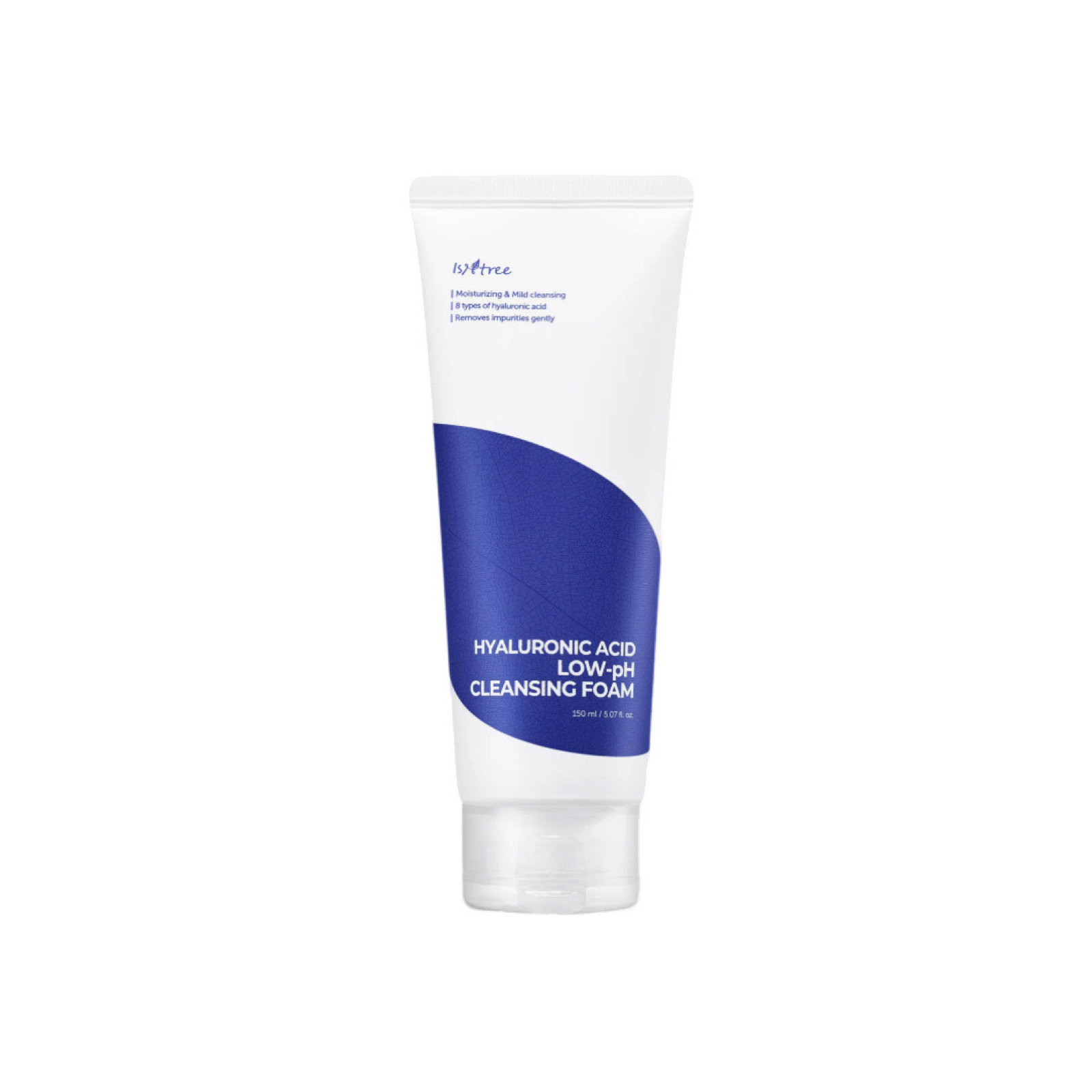
- Water-based cleanser: A gentle gel, foam, or other water-based cleanser follows to remove remaining residue, sweat, and everyday impurities.
The two cleansers have different jobs. You’re not simply washing your face twice with the same product.
This method is particularly useful in the evening because that’s when your skin may have accumulated sunscreen, makeup, skincare products, sweat and environmental grime throughout the day.
If you’re still deciding between different water-based cleansers, our guide to cleansing gel vs. cleansing foam breaks down the differences between the two formats and which skin types they may suit.
The simple version
Cleansing oil or balm → water-based cleanser → rest of your skincare routine
That’s the foundation of Korean double cleansing.
Why Is Double Cleansing Part of Korean Skincare?
Korean skincare is often associated with multi-step routines, but the underlying idea isn’t simply “more products are better.”
The goal is to build a routine where each step has a specific purpose.
Cleansing comes first because it prepares the skin for whatever follows. If you’ve been wearing sunscreen or makeup throughout the day, an oil cleanser can help break down those products before your regular cleanser finishes the cleansing process.
Double cleansing also has a clear place within the broader Korean skincare routine order. In the evening, it comes before toner, essence, serum, ampoule, and moisturizer.
For a complete look at how the different products fit together, see our guide on how to layer Korean skincare products from cleanser to sunscreen.
However, double cleansing isn’t a requirement for achieving healthy skin or “glass skin.” A simple routine can work extremely well, and the best approach is to use the steps your skin actually needs.
Korean Double Cleansing: How to Do It Step by Step
The technique is simple, but a few details make a difference.
Step 1: Apply an oil cleanser to dry skin
Start with dry hands and a dry face.
Apply a cleansing oil or balm and gently massage it over your face for around 30–60 seconds. Concentrate on areas where sunscreen, makeup, and excess oil tend to build up, such as the nose, forehead, and jawline.
There’s no need to scrub.
If you’re removing eye makeup, use extra care around the delicate eye area rather than rubbing aggressively.
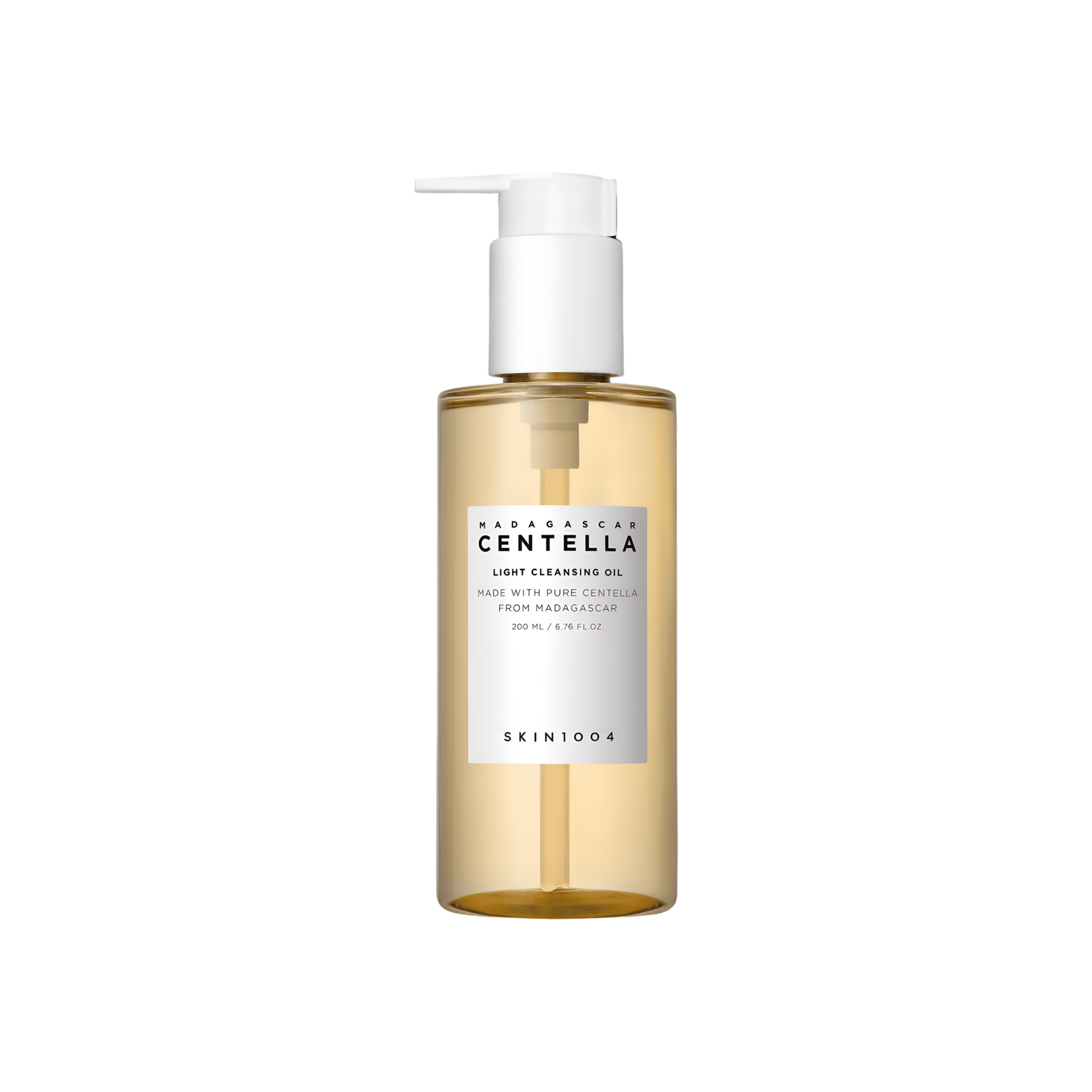
For example, MoskinLocker’s SKIN1004 Madagascar Centella Light Cleansing Oil is a lightweight oil cleanser designed to dissolve makeup, sunscreen, and oil-based buildup. It can serve as the first step when building a double-cleansing routine.
Step 2: Emulsify and rinse
Add a little lukewarm water to your hands and continue massaging the cleanser.
A cleansing oil should become lighter and milky as it emulsifies with water. Rinse thoroughly with lukewarm water.
Avoid very hot water, particularly if you have dry or sensitive skin.
Step 3: Use a water-based cleanser
Apply your second cleanser to damp skin.
Depending on your skin type, this might be a:
- Gel cleanser
- Gentle foam cleanser
- Low-pH cleanser
- Creamier water-based cleanser
Massage gently with your fingertips, then rinse thoroughly.
Your skin should feel clean and comfortable, not tight or squeaky.
If you’re particularly concerned with acne, congestion, or excess oil, our guide to the best Korean cleansers for acne-prone skin explains how to choose a second cleanser according to your skin’s specific needs.
Step 4: Pat dry and continue your routine
Gently pat your face dry with a clean, soft towel.
Then continue with the rest of your evening skincare routine, such as toner, serum, ampoule or moisturizer.
If you want to understand what comes immediately after cleansing, our guide to Korean skincare layering order covers where toner, essence, serum, moisturizer, and other steps belong.
Oil Cleanser vs. Water-Based Cleanser: What’s the Difference?
Understanding the difference between the two steps makes Korean double cleansing much easier to understand.
Oil-based cleanser | Water-based cleanser | |
Used | First | Second |
Common types | Cleansing oil, cleansing balm | Gel, foam or other water-based cleanser |
Helps remove | Makeup, sunscreen, sebum and oily residue | Sweat, dirt and remaining residue |
Skin application | Usually dry skin | Usually damp skin |
Main purpose | Break down and loosen buildup | Complete the cleansing process |
The goal isn’t to make your skin feel “squeaky clean.” A cleanser that leaves your face consistently tight, burning or uncomfortable may be too harsh for your skin.
For more detail on choosing your second cleanser, see Cleansing Gel vs. Cleansing Foam.
Who Should Use Korean Double Cleansing?
You may want to consider double cleansing if you regularly:
- Wear sunscreen during the day
- Wear makeup
- Use long-wearing or water-resistant complexion products
- Have substantial product buildup by the evening
- Prefer a two-step evening cleansing routine
If you’re wearing sunscreen and makeup, the first cleansing step can be particularly useful for loosening those products before the second cleanse.
But not everyone needs to double cleanse.
If you aren’t wearing makeup or substantial sunscreen and one gentle cleanser already leaves your skin clean and comfortable, adding another cleansing step may not provide much benefit.
Korean Double Cleansing for Different Skin Types
Your skin type should influence both whether you double cleanse and which products you choose.
Korean double cleansing for oily skin
Oily skin can benefit from an effective evening cleansing routine, particularly when sunscreen or makeup has been worn throughout the day.
However, don’t make the mistake of trying to remove every trace of oil from your skin.
Harsh cleansing and scrubbing can irritate oily or acne-prone skin. The goal is balance, not stripping.
If excess oil is one of your main concerns, our Korean skincare routine for oily skin goes deeper into choosing lightweight products while maintaining hydration.
Korean double cleansing for acne-prone skin
Double cleansing can be compatible with acne-prone skin, but it should not be treated as an acne treatment.
The main reason to double cleanse is to remove makeup, sunscreen, and daily buildup, not to “cure” breakouts.
If you’re acne-prone, look for gentle products appropriate for your skin and avoid aggressive rubbing.
For more product-specific guidance, see Is Korean Skincare Good for Acne? and our more focused guide to the best Korean cleansers for acne-prone skin.
Korean double cleansing for dry skin
Dry skin can still use a double cleansing routine, particularly when makeup or sunscreen needs to be removed.
Choose gentle formulas and avoid very hot water or prolonged massage.
If your skin feels tight immediately after cleansing, consider reducing the frequency of double cleansing or switching to milder products.
Korean double cleansing for sensitive skin
Sensitive skin needs the most cautious approach.
A gentle, fragrance-conscious cleanser may be preferable if your skin is easily irritated. Keep massage time short and avoid scrubbing.
You also don’t have to double cleanse simply because it’s a Korean skincare step.
If you’re prone to redness, burning, or irritation, our guide on whether Korean skincare is good for sensitive skin provides a broader look at choosing gentler K-beauty products.
Korean double cleansing for combination skin
Combination skin can benefit from a balanced approach.
Use an effective first cleanse to remove sunscreen and makeup, then choose a second cleanser that doesn’t leave the drier areas of your face feeling tight.
For a complete routine, see our Korean skincare routine for combination skin.
Do You Need to Double Cleanse Every Night?
No. It depends on what you’re wearing and how your skin responds.
If you wear sunscreen or makeup during the day, an evening double cleanse can be a useful way to remove those products.
If you haven’t worn makeup or substantial sunscreen and a single gentle cleanser is enough, you don’t necessarily need a second cleansing step.
This is especially important for dry and sensitive skin. More cleansing isn’t automatically better.
Should You Double Cleanse in the Morning?
Usually, no.
Korean double cleansing is primarily an evening routine because that’s when you’re removing the products and buildup accumulated throughout the day.
In the morning, follow the cleansing approach that works for your skin. Some people use a gentle cleanser, while others with dry or sensitive skin may prefer a simpler routine.
There is no need to force a two-step cleanse simply because it is part of K-beauty.
What Are the Benefits of Korean Double Cleansing?
When appropriate for your skin, double cleansing can offer several practical benefits:
- Helps remove makeup more thoroughly
- Helps loosen sunscreen and other long-wearing products
- Removes excess sebum and daily buildup
- Provides a clean starting point for your evening routine
- May reduce the temptation to scrub with one aggressive cleanser
- Creates a structured first step before the rest of your Korean skincare routine
One important distinction: double cleansing is not the same thing as exfoliating.
An oil cleanser doesn’t replace an exfoliant, and double cleansing shouldn’t leave your skin feeling stripped.
If your primary concern is clogged pores rather than makeup or sunscreen removal, our guide to the best Korean skincare for clogged pores covers the broader routine, including cleansing, exfoliation and pore-focused ingredients.
Common Korean Double Cleansing Mistakes to Avoid
Even a good cleansing method can cause problems when it’s overdone.
1. Scrubbing your skin
Cleansers don’t need aggressive friction to work.
Use your fingertips and gentle movements rather than washcloths, brushes or vigorous rubbing.
2. Using hot water
Use lukewarm water instead, especially if your skin is dry or sensitive.
3. Choosing two harsh cleansers
Your second cleanser should complement the first, not strip your skin after it.
4. Double cleansing when you don’t need to
If one gentle cleanser already does the job, there’s no rule saying you need two.
5. Treating double cleansing as an acne cure
Double cleansing can help remove makeup, sunscreen, and buildup, but acne has multiple contributing factors and may require targeted treatment.
6. Ignoring how your skin feels afterward
Your skin shouldn’t feel painfully tight, burning, or persistently irritated after cleansing.
Those signs are worth taking seriously.
How to Choose the Best Korean Cleansers for Double Cleansing
The best double-cleansing products aren’t necessarily the most expensive or the most viral.
For your first cleanse, look for:
- A cleansing oil or balm that emulsifies easily
- Effective removal of sunscreen and makeup
- A comfortable finish for your skin type
- A formula that doesn’t leave your skin feeling irritated
For your second cleanse, look for:
- A gentle gel or foam texture
- A comfortable, non-stripping finish
- A formula appropriate for your skin type
- A cleanser you can use consistently
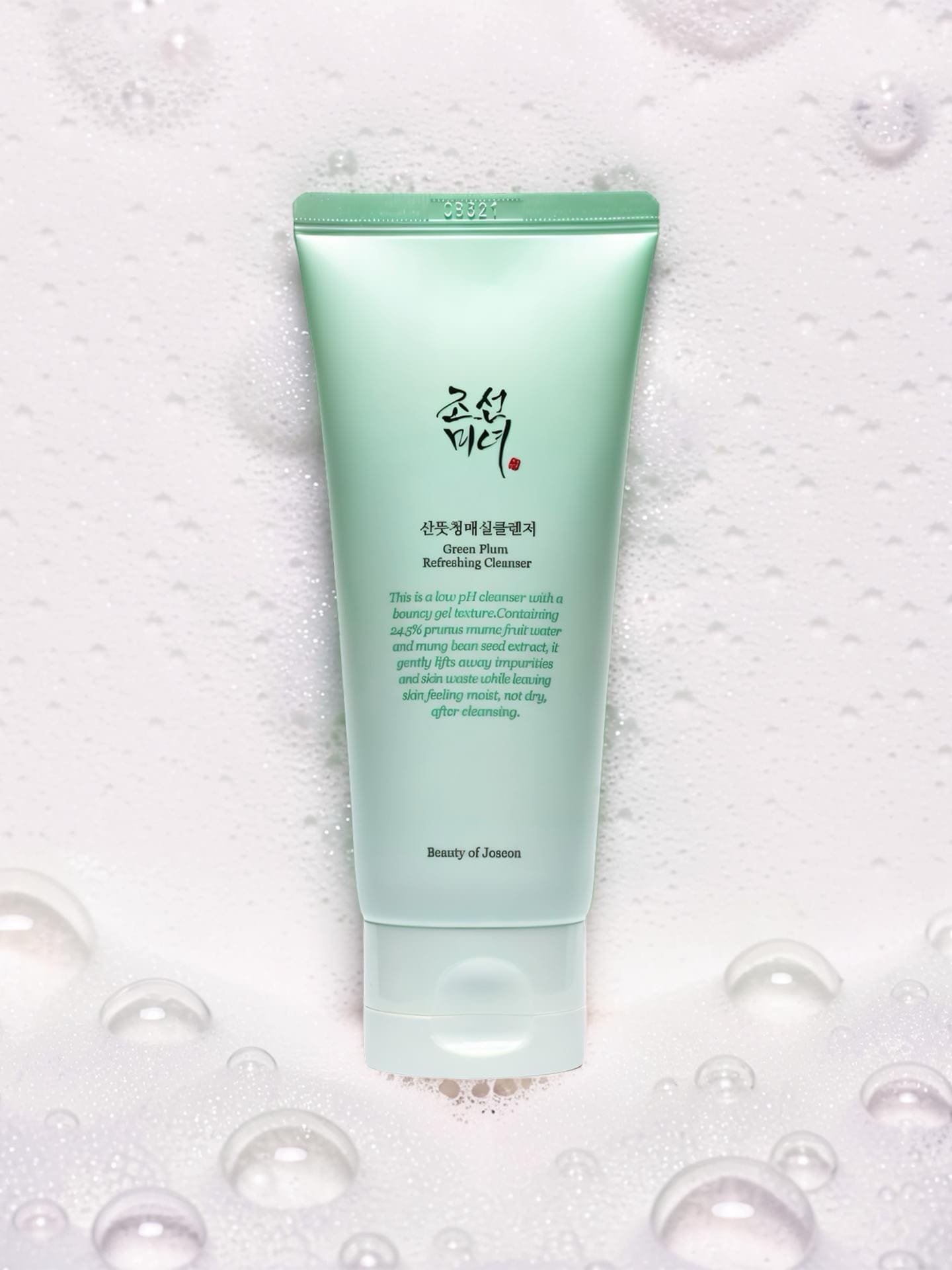
One example is the Beauty of Joseon Green Plum Refreshing Cleanser, which MoskinLocker positions as a low-pH, gentle water-based cleanser suitable for everyday use and particularly relevant to oily, combination, and sensitive skin.
You can also see how it fits into a complete brand routine in our Best Beauty of Joseon Products guide.
If you’re looking specifically for a first cleanse, Beauty of Joseon’s Radiance Cleansing Balm is another option highlighted in that guide for makeup and sunscreen removal.
The important point is to choose products according to your skin and your cleansing needs, rather than buying two products simply because they are popular.
Where Does Double Cleansing Fit Into a Korean Skincare Routine?
For a typical evening routine, the order can look like:
- Oil cleanser → 2. Water-based cleanser → 3. Toner → 4. Essence/ampoule → 5. Serum → 6. Moisturizer
You don’t need every step.
For example, someone with a simple routine might use:
Oil cleanser → gentle cleanser → moisturizer
Someone with more specific concerns might add a toner, serum or targeted treatment.
The important thing is that double cleansing sits at the beginning of the evening routine.
For a more complete breakdown of product order, see MoskinLocker’s Korean skincare layering guide.
Build Your Korean Skincare Routine With MoskinLocker
You don’t need to copy every step of a traditional Korean skincare routine.
The better approach is to identify your skin type and primary concern, then choose products that each serve a clear purpose.
At MoskinLocker, you can explore authentic Korean skincare across categories including:
- Korean toners
- Korean serums
- Korean cleansers
- Korean moisturisers
- Korean sunscreens
If a soothing, lightweight toner fits your routine, you can explore the Anua Heartleaf 77% Soothing Toner, which is particularly relevant for sensitive, combination and oily skin.
If you’re interested in understanding the product before buying it, our Anua Heartleaf 77 Toner review explains who it’s best suited to and where it fits into a routine.
For targeted PDRN and peptide care, you can also explore the Medicube Salmon PDRN Serum.
Explore Korean Skincare at MoskinLocker.
Frequently Asked Questions About Korean Double Cleansing
What is Korean double cleansing in simple terms?
Korean double cleansing means using an oil-based cleanser first and a water-based cleanser second. The first step helps loosen makeup, sunscreen, and excess sebum, while the second removes remaining residue and everyday impurities.
Is Korean double cleansing good for oily skin?
It can be, particularly if you regularly wear sunscreen or makeup. However, oily skin still needs gentle cleansing. Double cleansing should not leave your skin feeling stripped or irritated.
For broader oily-skin guidance, see our Korean skincare routine for oily skin.
Is double cleansing good for acne-prone skin?
It can be part of an acne-conscious routine, but double cleansing does not treat acne on its own. Choose gentle products, avoid scrubbing, and use targeted acne treatments when appropriate.
Can you double cleanse if you have sensitive skin?
Yes, but you may need to be more selective about products and frequency. If double cleansing causes burning, redness, or persistent irritation, simplify your routine.
Our guide on Korean skincare for sensitive skin goes into more detail.
Should I double cleanse every night?
Not necessarily. It can be useful when you’re removing sunscreen, makeup or substantial daily buildup. If one gentle cleanser is sufficient, you don’t need to add a second cleanse simply for the sake of following a routine.
Should I double cleanse in the morning?
Usually not. Double cleansing is mainly an evening technique. In the morning, use the cleansing approach that best suits your skin type.
What comes first, cleansing oil or water-based cleanser?
The cleansing oil or balm comes first. Apply it to dry skin, emulsify and rinse, then follow with your water-based cleanser.
Can I use a cleansing balm instead of cleansing oil?
Yes. Both cleansing oils and cleansing balms can serve as the oil-based first step of a double cleansing routine. The better choice is the one that removes your daily products effectively and feels comfortable on your skin.
Does double cleansing remove sunscreen?
An oil cleanser can help loosen sunscreen, including some water-resistant formulas, before the second cleansing step. How easily a particular sunscreen comes off depends on the formulation.
Does double cleansing cause skin purging?
Double cleansing itself should not automatically be described as causing “purging.” If you develop new irritation or breakouts after introducing a product, consider whether the formula or routine is suitable for your skin rather than assuming the reaction is a normal purging phase.
Final Thoughts: Is Korean Double Cleansing Right for You?
Korean double cleansing is best understood as a practical two-step cleansing method, not a rule that everyone needs to follow.
An oil cleanser or balm can help loosen sunscreen, makeup, and excess sebum, while a gentle water-based cleanser completes the cleansing process. For people who regularly wear sunscreen or makeup, this can be a useful addition to an evening Korean skincare routine.
At the same time, more cleansing isn’t automatically better. Your skin type, the products you wear, and how your skin responds should determine whether you double cleanse every evening, occasionally, or not at all.
The best Korean skincare routine isn’t the longest one. It’s the one that effectively addresses your skin’s needs without creating unnecessary irritation.
If you’re ready to build that routine, start with the basics: choose the right cleanser, follow with products that address your primary concern, moisturize appropriately, and protect your skin during the day.
Explore MoskinLocker for Korean cleansers, toners, serums, moisturizers, and sunscreens, and build a routine around what your skin actually needs.