
Finding the best Korean cleansing oils for acne-prone skin can feel counterintuitive. If your face already produces excess oil, the idea of applying more oil might sound like a recipe for clogged pores and breakouts.
But cleansing oils work differently from the oil your skin naturally produces. They are designed to dissolve makeup, sunscreen, excess sebum, and other oil-based buildup so these impurities can be rinsed away.
The trick is choosing a formula that emulsifies properly, rinses cleanly, and suits your skin’s tolerance. This is especially important if you experience frequent breakouts, have sensitive skin, or already use acne treatments.
Korean cleansing oils can be a useful first step in an evening skincare routine, particularly if you regularly wear sunscreen or makeup. However, not everyone needs to double cleanse, and a cleansing oil should not be mistaken for an acne treatment.
In this guide, we’ll explain how cleansing oils work, what to look for when choosing one, how to use them correctly, and which Korean skincare options are worth considering for oily and acne-prone skin.
Are Korean Cleansing Oils Good for Acne-Prone Skin?
Yes, a suitable cleansing oil can fit into a routine for acne-prone skin. Its primary purpose is to help dissolve oil-based products and buildup, including makeup, water-resistant sunscreen, and excess sebum.
Oil-based cleansers work on the principle that oily substances can be loosened by an appropriate cleansing formula. When water is added, an emulsifying cleansing oil turns milky, helping it rinse away rather than remaining as an oily layer.
This can be particularly useful at night when your skin has accumulated sunscreen, makeup, and skincare products throughout the day.
However, cleansing oils do not automatically prevent acne or clear existing breakouts. Results depend on the complete formula, how thoroughly the product is rinsed, and the rest of your skincare routine.
If a cleansing oil consistently causes irritation or seems to aggravate your breakouts, stop using it and consider a different formula.
Quick Answer: What Is the Best Korean Cleansing Oil for Acne-Prone Skin?
The best Korean cleansing oil for acne-prone skin is one that effectively removes makeup and sunscreen, emulsifies with water, rinses away comfortably, and doesn’t leave your skin feeling irritated.
One option available at MoskinLocker is:
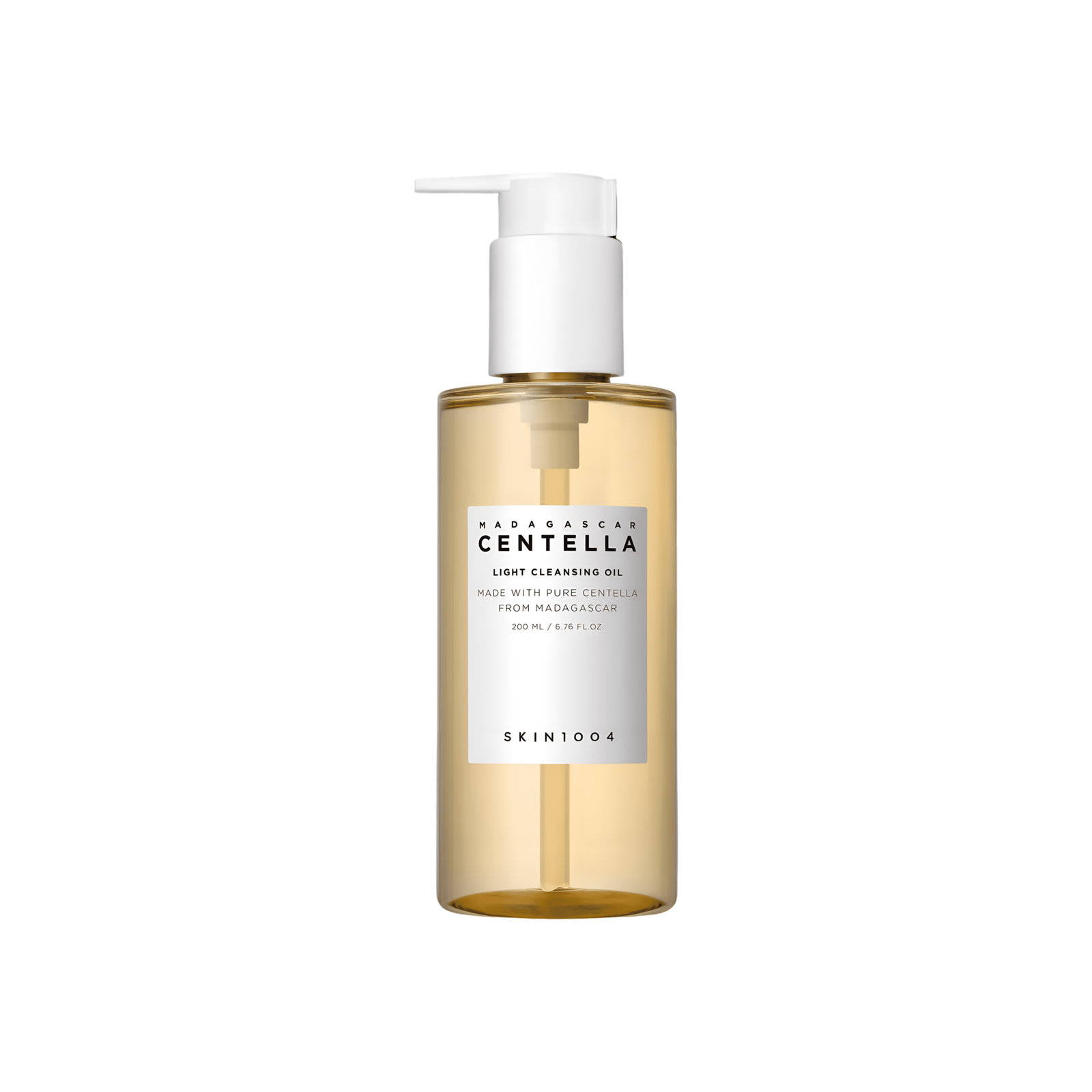
SKIN1004 Madagascar Centella Light Cleansing Oil
Best for: People looking for a lightweight oil cleanser to remove makeup, sunscreen, and daily buildup.
The formula features Centella asiatica extract alongside cleansing ingredients and several botanical oils. Its lightweight texture makes it an option worth considering if you are new to oil cleansing.
You can explore it here: SKIN1004 Madagascar Centella Light Cleansing Oil.
One important consideration: the formula also contains bergamot and other fragrant botanical oils. If your skin is sensitive to fragrance or essential oils, review the full ingredient list before purchasing. Centella in a formula does not guarantee that every ingredient will suit sensitive skin.
How to Choose the Best Korean Cleansing Oil for Acne-Prone Skin
Not all cleansing oils are formulated the same way. Instead of choosing a product simply because it is popular, look at how it cleanses, how it rinses, and whether its ingredients suit your skin.
1. Choose a Formula That Emulsifies Easily
Emulsification is one of the most important parts of using a cleansing oil.
When you add water to an emulsifying cleansing oil, it should become a milky or cloudy mixture that rinses away more easily. This helps remove loosened makeup, sunscreen, and excess sebum.
A cleansing oil that is difficult to rinse off may leave an uncomfortable residue, although residue alone does not prove that a product will clog your pores.
What to look for: A product with clear instructions for emulsifying and rinsing, plus a texture that feels comfortable after cleansing.
2. Consider Your Skin’s Sensitivity
Acne-prone skin can also be sensitive, especially when your routine includes exfoliating acids, retinoids, or other acne treatments.
If your skin reacts easily, examine the complete ingredient list rather than relying on marketing claims such as calming, natural, or gentle.
Fragrance and essential oils can irritate some people. Botanical ingredients are not automatically unsuitable, but they are not automatically irritation-free either.
What to look for: A formula without ingredients you already know your skin reacts to, and one that rinses cleanly without persistent stinging or tightness.
3. Don’t Assume Every Oil Is Bad for Oily Skin
The presence of an oil in a cleansing product does not automatically make it unsuitable for acne-prone skin.
Cleansing oils contain different oils, emollients, and emulsifiers, and the finished formula matters more than the name of any single ingredient.
Likewise, an oil-free product is not guaranteed to work better for everyone.
What to look for: A well-formulated cleanser that removes your sunscreen or makeup effectively and leaves your skin comfortable after rinsing.
4. Choose According to What You Need to Remove
Your cleansing needs should influence your choice.
- If you wear water-resistant sunscreen daily, you may appreciate an oil cleanser that removes it effectively.
- If you wear long-wearing makeup, look for a formula intended to dissolve makeup without excessive rubbing.
- If you rarely wear makeup and use a sunscreen that your regular cleanser removes comfortably, you may not need an additional cleansing step.
- If your skin is easily irritated, prioritize comfortable cleansing over a complicated routine.
The best product is the one that serves a genuine purpose in your routine.
Featured Korean Cleansing Oil at MoskinLocker
SKIN1004 Madagascar Centella Light Cleansing Oil
Best for: Lightweight first cleansing and removing everyday makeup or sunscreen.
Shop SKIN1004 Madagascar Centella Light Cleansing Oil
The SKIN1004 Madagascar Centella Light Cleansing Oil is a lightweight oil-based cleanser formulated to dissolve makeup, dirt, sunscreen, and oil-based buildup.
Its formula includes Centella asiatica extract, sunflower seed oil, olive fruit oil, and jojoba seed oil, alongside cleansing and emulsifying ingredients.
Why consider it?
- Its lightweight texture may appeal to people who dislike heavy cleansing oils.
- The formula is designed to loosen makeup, sunscreen, and excess sebum.
- Centella asiatica is included as a skin-conditioning botanical ingredient.
- The product can serve as the first step in an evening double-cleansing routine.
Who should be cautious?
The product contains bergamot fruit oil, geranium flower oil, rose flower oil, limonene, and linalool. These ingredients may be unsuitable for people sensitive to fragrance or certain botanical oils.
If your skin is very reactive, consider a fragrance-free alternative with a suitable emulsifying formula. Always assess the full ingredient list, not just the featured ingredients.
How to use it: Apply the cleansing oil to dry hands and a dry face. Massage gently, add a little water to emulsify it, and rinse thoroughly with lukewarm water. Follow with a gentle water-based cleanser if needed.
The aim is effective cleansing without aggressive rubbing or an uncomfortable after-feel.
How to Use Korean Cleansing Oil Correctly
Even a suitable cleansing oil may feel uncomfortable if it is used incorrectly. Fortunately, the process is straightforward.
Step 1: Start With Dry Hands and a Dry Face
Most cleansing oils are designed to be applied to dry skin, although you should always follow the instructions for your particular product.
Dispense the recommended amount into your hands and spread it gently over your face.
Step 2: Massage Gently
Use light circular movements to loosen makeup, sunscreen, and daily buildup.
Pay attention to areas where makeup or sunscreen tends to accumulate, such as around the nose and hairline.
Avoid vigorous rubbing, particularly around the eyes or on active breakouts.
You do not need to massage for several minutes or repeatedly work at individual pores. Gentle, thorough application is enough.
Step 3: Add Water to Emulsify
Wet your fingertips and massage the cleanser again.
The oil should turn milky or cloudy as it mixes with water. This process helps the cleanser rinse away more easily.
Follow the product’s directions if its texture or application method differs.
Step 4: Rinse Thoroughly
Rinse with lukewarm water until the cleanser has been removed.
Avoid very hot water and harsh scrubbing, especially if your skin is already irritated.
Step 5: Follow With a Water-Based Cleanser if Needed
If you are double cleansing, use a gentle gel or foam cleanser as your second step.
Choose one that removes remaining residue without leaving your face persistently tight or dry.
For product-specific guidance, see MoskinLocker’s Best Korean Cleansers for Acne-Prone Skin.
Step 6: Continue With Your Evening Routine
After cleansing, apply the products your skin needs, such as a suitable serum and moisturizer.
You do not need to add multiple exfoliating products simply because you have used an oil cleanser.
Is Double Cleansing Necessary for Oily or Acne-Prone Skin?
No. Double cleansing is an option, not a requirement for everyone.
The method involves using an oil-based cleanser first, followed by a water-based cleanser. It can be useful when you need to remove makeup, water-resistant sunscreen, or other stubborn products.
However, if a single gentle cleanser removes your daily buildup effectively and leaves your skin comfortable, an additional step may be unnecessary.
For acne-prone skin, avoid treating double cleansing as a way to scrub away breakouts. Excessive washing and aggressive rubbing can irritate the skin.
For a more detailed explanation, read Korean Double Cleansing: What It Is, How to Do It and Who Should Use It.

Common Mistakes to Avoid When Using Cleansing Oil
Using Too Much Product
Follow the manufacturer’s instructions rather than assuming that more oil will produce a better cleanse.
Skipping Emulsification
Adding water helps an emulsifying cleansing oil rinse away. If you rinse too quickly without emulsifying, you may find that the product is more difficult to remove.
Scrubbing Active Breakouts
Cleansing oil works by loosening buildup, not by physically scrubbing acne away. Use gentle movements and avoid picking or rubbing blemishes.
Double Cleansing Too Aggressively
Using two harsh cleansers can leave your skin dry and uncomfortable. Choose a second cleanser that complements the first rather than stripping your skin.
Choosing a Product Based Only on Viral Reviews
A popular product may work well for one person but not another. Check the ingredient list, texture, cleansing method, and your own sensitivity.
Expecting a Cleansing Oil to Treat Acne
Cleansing oils are primarily cleansing products. If you have persistent or severe acne, you may need a targeted treatment or professional advice rather than relying on cleansing alone.
Frequently Asked Questions About Korean Cleansing Oils
Are Korean cleansing oils good for acne-prone skin?
They can be suitable for acne-prone skin when the formula works well for you and rinses away comfortably. Their main role is to remove makeup, sunscreen, and oil-based buildup. They should not be treated as a standalone acne treatment.
Will cleansing oil clog my pores?
Not necessarily. Whether a product suits your skin depends on the complete formulation, how it is used, and individual tolerance. If you notice persistent irritation or worsening breakouts after introducing a product, discontinue it and reassess your routine.
Should oily skin use cleansing oil every day?
If you wear makeup or sunscreen daily, an evening cleansing oil may be useful. However, daily use is not mandatory if your regular cleanser removes your products effectively. Let your cleansing needs guide the decision.
Is cleansing oil better than micellar water?
Neither is universally better. Cleansing oils are useful for dissolving makeup, sunscreen, and oil-based buildup. Micellar water can be convenient for lighter cleansing or makeup removal. The better choice depends on the product, your routine, and how your skin responds.
Can I use cleansing oil if I have sensitive skin?
Yes, but choose carefully. Some cleansing oils contain fragrance or essential oils that may irritate sensitive skin. Review the full ingredient list, patch-test according to the product instructions, and discontinue use if irritation develops.
Should I use cleansing oil before or after face wash?
If you are double cleansing, the oil cleanser generally comes first on dry skin, followed by a water-based cleanser. You can then continue with toner, serum, and moisturizer as needed.
Does cleansing oil remove blackheads?
Cleansing oil can loosen surface buildup and remove excess sebum, but it should not be relied on to eliminate blackheads. Persistent blackheads may respond better to an appropriate acne treatment, such as a salicylic acid product, depending on your skin’s needs.
Build Your Korean Skincare Routine With MoskinLocker
Your skincare routine does not need to follow whatever product is currently going viral on social media.
The better approach is to choose products based on your skin type, your concerns, and the role each product plays in your routine.
At MoskinLocker, you can explore authentic Korean skincare across categories including:
- Korean toners
- Korean serums
- Korean cleansers
- Korean moisturizers
- Korean sunscreens
If you want a lightweight first cleanse, explore the SKIN1004 Madagascar Centella Light Cleansing Oil. Pair it with a suitable water-based cleanser if your routine benefits from double cleansing.
For more guidance, read our Korean skincare layering guide to understand how cleansing fits into your morning and evening routines.
Explore Korean skincare at MoskinLocker and build a routine around what your skin actually needs.
Final Thoughts
The best Korean cleansing oils for acne-prone skin are not necessarily the most popular, the richest, or the ones with the longest ingredient lists. They are the formulas that remove makeup, sunscreen, and daily buildup effectively while leaving your skin comfortable.
If you regularly wear sunscreen or makeup, a well-formulated cleansing oil may be a useful addition to your evening routine. If your skin is sensitive, pay particular attention to fragrance and botanical oils. And if a single gentle cleanser already meets your needs, you do not have to double cleanse simply because it is part of a popular Korean skincare routine.
Start with your actual cleansing needs, use your products gently, and pay attention to how your skin responds. A thoughtful routine will serve you better than adding another step without a clear reason.